Join The Primal and the world’s top doctors, creators, and health pioneers — Dr. Ken Berry, Dr. Shawn Baker, Dr. Berg, Dr. Chaffee, and more — at Meatstock x The Primal 2026.
The ultimate Carnivore, Keto, and Health convention.
Many people wonder: is steak hard to digest? The short answer is that steak is not difficult to digest for most healthy people. The human digestive system is designed to break down animal-based foods using stomach acid, digestive enzymes, and bile. However, your body may digest differently depending on your digestive health and the cut of meat, fat content, portion size, and cooking method. If you are on animal-based diets such as Carnivore and Keto and have problems digesting meat, let’s learn tips and hacks to streamline fat digestion and find out how meat can affect our digestive system.
Highlights
Is Steak Hard to Digest?
Steak is not considered a difficult food to digest for most healthy individuals. Actually, the human body has been designed to digest meat [1].
The body produces specific digestive acids and enzymes that process animal protein and fat. When you eat steak, your digestive system breaks it down into [2]:
Amino acids from protein
Fatty acids from fat
Essential nutrients such as iron, zinc, vitamin B12, and creatine
Unlike many plant foods, steak contains no fiber or fermentable carbohydrates, so it does not require bacterial fermentation in the colon for digestion.
However, some people may experience digestive discomfort after eating steak because of:
Eating a very large portion
Choosing a high-fat cut
Eating too quickly
Suddenly increasing meat intake
Underlying digestive issues
Factor
How It Affects Steak Digestion
Cut of steak
Fatty cuts digest more slowly than lean cuts.
Portion size
Larger meals require more digestive work.
Cooking method
Tender, slow-cooked meat may be easier to digest.
Eating speed
Poor chewing can make digestion harder.
Individual tolerance
Digestive responses vary between people.
Now that we know the answer to the question, “Is steak hard to digest?”, let’s learn about the process of steak or meat digestion in the body and find ways to make this internal process smoother.
Join 100,000+ subscribers to get monthly emails on the best science-based tools and strategies for optimal health from Rina.
Thank you! You're now subscribed!
Oops! Something went wrong while submitting the form.
We value your time and send just 1 insightful email monthly.
You'll also get Rina's exclusive Daily Blueprint. In it, Rina shares her daily routine. She also shares practical tools and protocols that you can use to heal inflammation and maximize your health.
By submitting your email to subscribe, you agree to The Primal's privacy policy
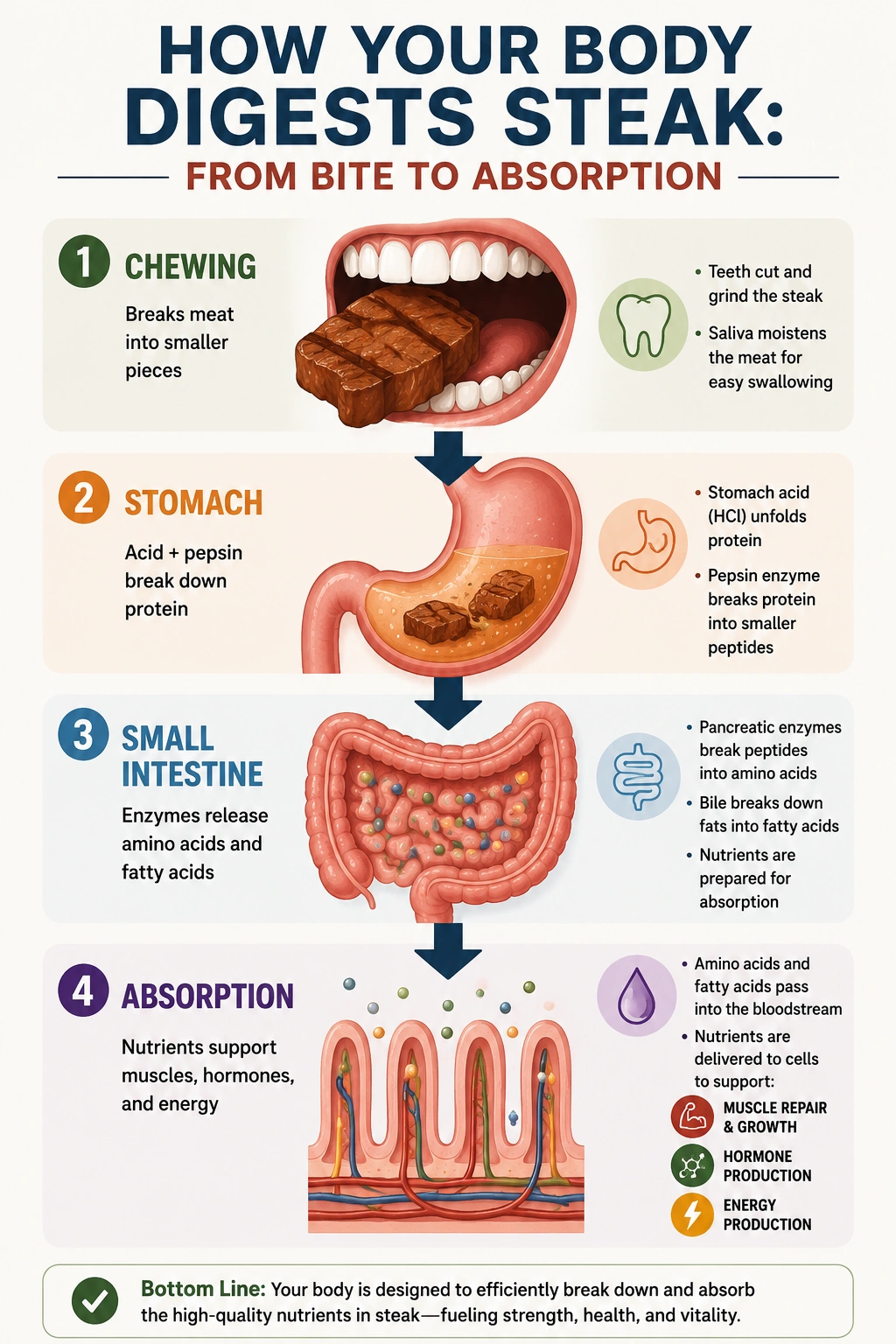
How Does the Body Digest Steak?
The digestive process begins immediately after eating steak and involves several organs working together.
1. Chewing and Saliva
Chewing breaks steak into smaller pieces, increasing surface area for digestion. Unlike carbohydrates, protein digestion does not begin significantly in the mouth.
Proper chewing can make meat easier to digest by reducing the pressure and workload on the stomach.
[cta-gocarnivore-plans]
2. Stomach Digestion
The stomach plays the biggest role in breaking down steak. Stomach acid:
Unfolds meat proteins
Activates the enzyme pepsin
Breaks proteins into smaller peptides
The acidic environment of the stomach is naturally designed to process high-protein foods.
After leaving the stomach, steak enters the small intestine, where:
Pancreatic enzymes break proteins into amino acids.
Bile helps digest dietary fat.
Nutrients are absorbed into the bloodstream.
The amino acids from steak can then be used for muscle repair, hormone production, enzyme production, and immune function.
We should also note that different foods are not digested the same, and meat generally takes longer to digest.
Does Meat Take Longer to Digest?
Yes, meat can take longer to digest than some carbohydrate foods because protein and fat require more complex digestion. However, slower digestion does not mean poor digestion [3].
The digestion time depends on fat content, portion size, cooking method, and individual metabolism.
A slower digestive process can also mean:
Longer-lasting fullness
Stable energy levels
Reduced cravings
While all meat goes through this process for digestion, some people believe that red meat is harder to digest.
The short answer is no. Actually, the idea that red meat is automatically difficult to digest is a common misconception. Digestibility depends more on the food’s composition, how you cook it, and your digestive system [4] [5].
Let’s check out the table below that compares the digestion process of different kinds of food.
Food
Main Components
Possible Digestive Considerations
Steak
Protein + fat
Requires stomach acid and enzymes
Bread
Starch + gluten
May bother people sensitive to gluten or refined carbohydrates
Beans
Fiber + carbohydrates
Can cause gas due to fermentation
Vegetables
Fiber + plant compounds
May cause bloating in some individuals
Removing highly processed foods and reducing fermentable carbohydrates can improve digestive comfort for many people.
Although steak is nutritious, some people report feeling full or heavy after eating a large steak dish.
Some people feel full or heavy after a large meal, but this does not necessarily mean the meat is difficult to digest. Common reasons for feeling heavy include [6]:
High Fat Content: Fat slows stomach emptying, which can make meals feel more satisfying and longer-lasting. For example: ribeye → higher fat, slower digestion; sirloin → leaner, often feels lighter; tenderloin → very tender and lower in fat. This is why the Carnivore Diet and Keto Diet focus on eating meat.
Large Portions: A 500-gram steak requires more digestive effort than a smaller serving. Many people on Carnivore or Keto diets find that appetite naturally regulates over time, leading to smaller meals.
Sudden Increase in Meat Intake: People transitioning from a high-carbohydrate diet to a Carnivore, Keto, or Low-Carb Diet may need time to adapt. During adaptation, some people experience changes in bowel movements, temporary bloating, and changes in appetite.
So, how can we get rid of digestive issues on meat-based diets like Keto, Ketovore, and Carnivore?
Many Carnivore Diet followers experience better digestion after removing foods that can cause problems for some individuals, including:
Highly processed foods
Refined carbohydrates
Certain fermentable fibers
Foods they personally do not tolerate well
A Carnivore Diet focuses mainly on animal-based foods such as beef, eggs, poultry, fish, and animal fats that can provide the following nutrients.
Nutrient
Benefit
Complete protein
Provides all essential amino acids
Heme iron
Highly absorbable form of iron
Zinc
Supports immune function
Vitamin B12
Important for nerves and blood cells
Creatine
Supports muscle energy
While some people do well on higher-fiber diets, others report that reducing plant foods helps reduce digestive symptoms. But please note that individual responses vary.
Those who wonder “Is steak hard to digest?” need to work on their cooking skills or choose meats cooked in better ways because cooking can affect how easy meat is to eat and digest.
Slow-cooked beef, stews, ground beef, and tender cuts are more easily digested. However, very large steaks, extremely fatty cuts, and tough, undercooked connective tissue are usually harder to digest.
Eat Slowly and Chew Thoroughly
Simple habits that can improve digestion:
Do not eat too fast.
Chew meat completely.
Stop eating when full.
Avoid overeating.
Although many people can easily eat, digest, and tolerate steak, some individuals may experience discomfort. But can steak cause digestive issues?
Steak is not hard to digest for most healthy people. The human body has specialized mechanisms to break down animal protein and fat.
If steak causes discomfort, the issue may be related to portion size, fat content, cooking method, eating habits, and individual digestive differences.
For people following Keto or Carnivore diets, steak is a nutritious food that provides complete protein and essential nutrients while avoiding many common carbohydrates that trigger digestive issues.
FAQs
Now that we have answered the question, “Is steak hard to digest?”, let’s find answers to the most frequently asked questions about steak and meat digestion.
[cta-gocarnivore-plans]
Is Steak Harder to Digest than Chicken?
Not necessarily. Steak may feel heavier because some cuts contain more fat and connective tissue, but it is not automatically harder to digest than chicken.
Digestion time varies depending on portion size, fat content, and individual metabolism. A large fatty steak generally takes longer to digest than a lean protein source.
Why Does Steak Upset My Stomach?
Steak may cause discomfort because of large portions, high fat content, eating too quickly, or digestive sensitivity.
Is Red Meat Bad for Digestion?
No, red meat is not bad for digestion. Many people digest it well, especially when it is prepared properly and eaten in appropriate portions.
Yes, steak is one of the main foods consumed on carnivore diets because it provides complete protein, essential fats, and important micronutrients.
Can People with Sensitive Stomachs Eat Steak?
Many people with sensitive digestion tolerate steak well, especially leaner cuts and smaller portions. However, individual responses vary.
Is Meat Easier to Digest than Vegetables?
It depends on the person. Meat provides highly digestible protein, while some vegetables contain fiber and plant compounds that may cause digestive symptoms in sensitive individuals.
Every week your favorite Carnivore doctors like Dr Chaffee, Dr Baker, Dr Bright join us LIVE to answer your medical questions and our coaches will help you lose weight and heal inflammation fast.
The Primal is your ultimate resource for the ketogenic diet—helping you lose weight, heal chronic disease, and take back your health, all for free!
Founded by Rina Ahluwalia, a health expert with 20+ years of experience and host of The Primal Podcast (on YouTube, Spotify & Apple Podcasts), we bring you weekly in depth conversations with board-certified doctors on topics like insulin resistance, cancer prevention, heart disease, and more.
Everything we share is backed by research and published on The Primal Lab, with references, books, tools, and easy-to-follow guides. Plus, you’ll find thousands of free articles, blog posts, recipes, and troubleshooting tips at ThePrimal.com to help you succeed on Carnivore and Keto. 👉 Subscribe to The Primal Podcast on YouTube or join our mailing list using the below form for the latest health insights—straight to your inbox!