Join The Primal and the world’s top doctors, creators, and health pioneers — Dr. Ken Berry, Dr. Shawn Baker, Dr. Berg, Dr. Chaffee, and more — at Meatstock x The Primal 2026.
The ultimate Carnivore, Keto, and Health convention.
Starting a Keto Diet can help you lose weight quickly, but it can come with headaches, fatigue, muscle cramps, dizziness, and brain fog. Many people assume these symptoms mean the ketogenic diet is not right for them. However, these are usually caused by electrolyte imbalances. Understanding how Keto Diet electrolytes work is one of the most important steps toward a healthy Keto Diet experience. Whether you want to lose weight, control blood sugar, improve mental clarity, or increase energy, you need to balance your electrolyte levels. So, let’s dig in and learn what electrolytes do and how we can get enough.
Highlights
The main Keto Diet electrolytes are sodium, potassium, magnesium, and calcium.
Sodium requirements usually increase during the early stages of ketosis.
Potassium supports healthy muscles, nerves, and heart function.
Magnesium helps energy production, muscle relaxation, sleep, and hundreds of enzymatic reactions.
Calcium is important for bone health and normal muscle contractions.
Whole foods should be your main source of electrolytes.
Supplements can be useful for some people, but are not generally necessary.
Hydration involves replacing both fluids and electrolytes, not just drinking more water.
Individual electrolyte needs vary depending on activity level, climate, health status, medications, and sweat losses.
What Are Keto Diet Electrolytes and Why Are They Important?
Electrolytes are minerals that help regulate fluid balance, nerve signaling, muscle contractions, heart function, and many other essential processes in the body [1].
On a ketogenic diet, you lose more water, and with that, you lose sodium, potassium, and magnesium [2].
If these Keto Diet electrolytes are not replaced, you may experience dehydration-like symptoms, such as headaches, fatigue, muscle cramps, dizziness, and constipation, known as the Keto or Carnivore Flu.
Although electrolytes make up only a small percentage of your body's mineral content, they are involved in hundreds of physiological processes every second [3].
Some of their most important functions include:
Maintaining fluid balance inside and outside your cells
Supporting healthy nerve communication
Allowing muscles, including your heart, to contract properly
Helping regulate blood pressure
Supporting acid-base (pH) balance
Helping nutrient transport into cells
Removing cellular waste
Supporting normal brain function
Without adequate electrolytes, even drinking plenty of water will not keep your body functioning properly.
Join 100,000+ subscribers to get monthly emails on the best science-based tools and strategies for optimal health from Rina.
Thank you! You're now subscribed!
Oops! Something went wrong while submitting the form.
We value your time and send just 1 insightful email monthly.
You'll also get Rina's exclusive Daily Blueprint. In it, Rina shares her daily routine. She also shares practical tools and protocols that you can use to heal inflammation and maximize your health.
By submitting your email to subscribe, you agree to The Primal's privacy policy
Hydration vs. Electrolytes: What Is the Difference?
Many people think staying hydrated simply means drinking more water. While water is essential, hydration depends on both fluids and electrolytes [4].
Water helps replace lost fluids, but electrolytes help your body absorb, distribute, and retain that fluid while supporting normal nerve and muscle function.
Drinking too much plain water without replacing electrolytes can dilute sodium levels and worsen symptoms in some situations.
Hydration
Electrolytes
Replace fluids
Replace essential minerals
Prevent dehydration
Support fluid balance
Necessary for every cell
Necessary for nerve and muscle function
Water alone may not correct electrolyte losses
Help the body use water effectively
So, the goal is not simply to drink more water but to maintain the right balance between fluids and electrolytes, especially on a Keto Diet, where you lose more water and electrolytes.
One of the biggest differences between a ketogenic diet and a high-carbohydrate diet is how the body regulates water and minerals [5].
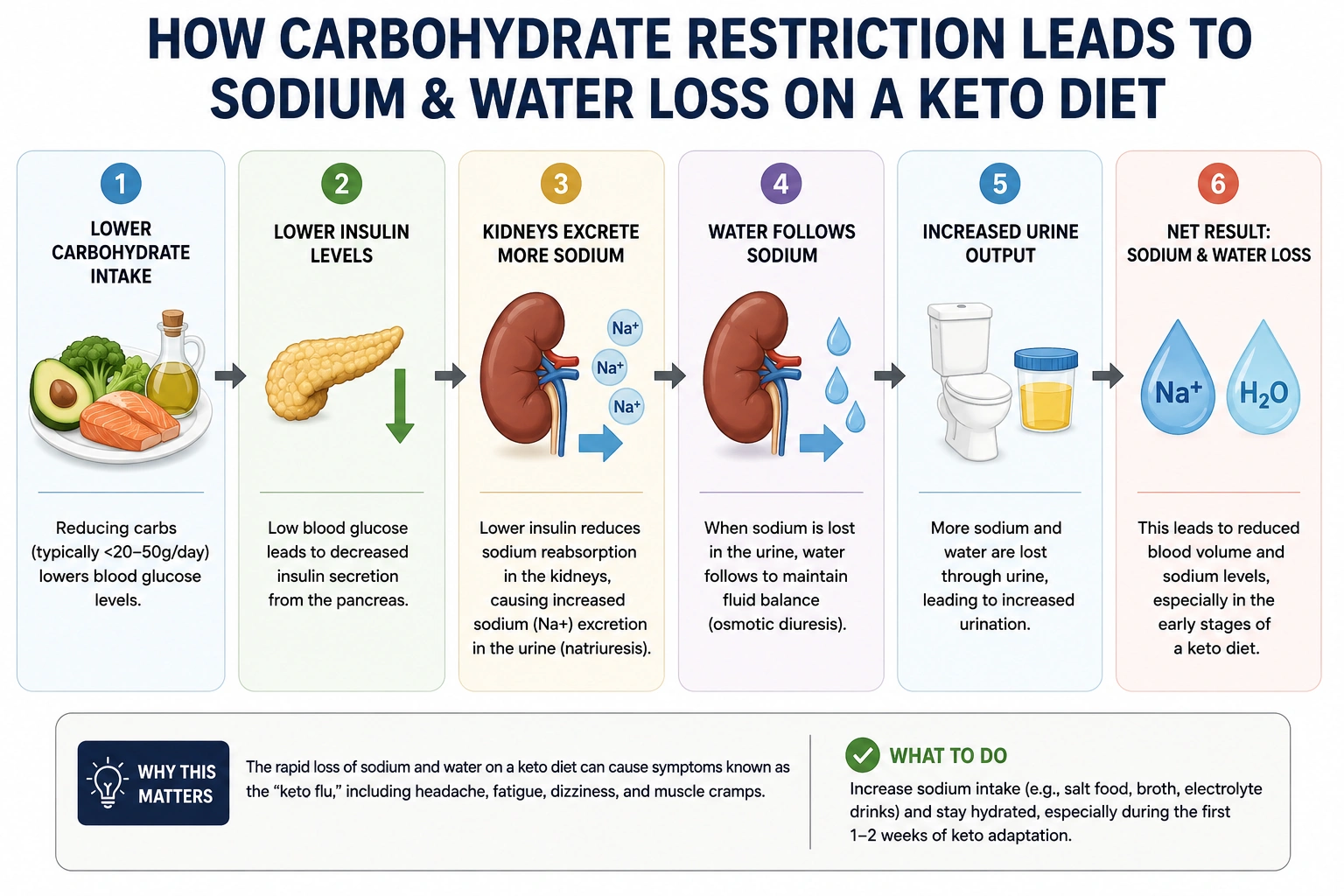
On a Keto Diet, you should eat fewer carbohydrates. When carbohydrate intake drops significantly, insulin levels also decrease [6].
While this is one of the key reasons Keto can improve blood sugar control and promote fat burning, it also changes how your kidneys handle sodium.
Normally, insulin encourages the kidneys to retain sodium. With less insulin circulating, the kidneys begin releasing more sodium into the urine. Because water naturally follows sodium, your body also loses more water.
This explains why many people experience rapid weight loss during the first week of low-carb diets. Much of this initial weight loss comes from water rather than body fat.
However, sodium is not the only mineral affected by reducing carbohydrates. As you lose more fluids, potassium and magnesium levels can also decline if you do not consume enough.
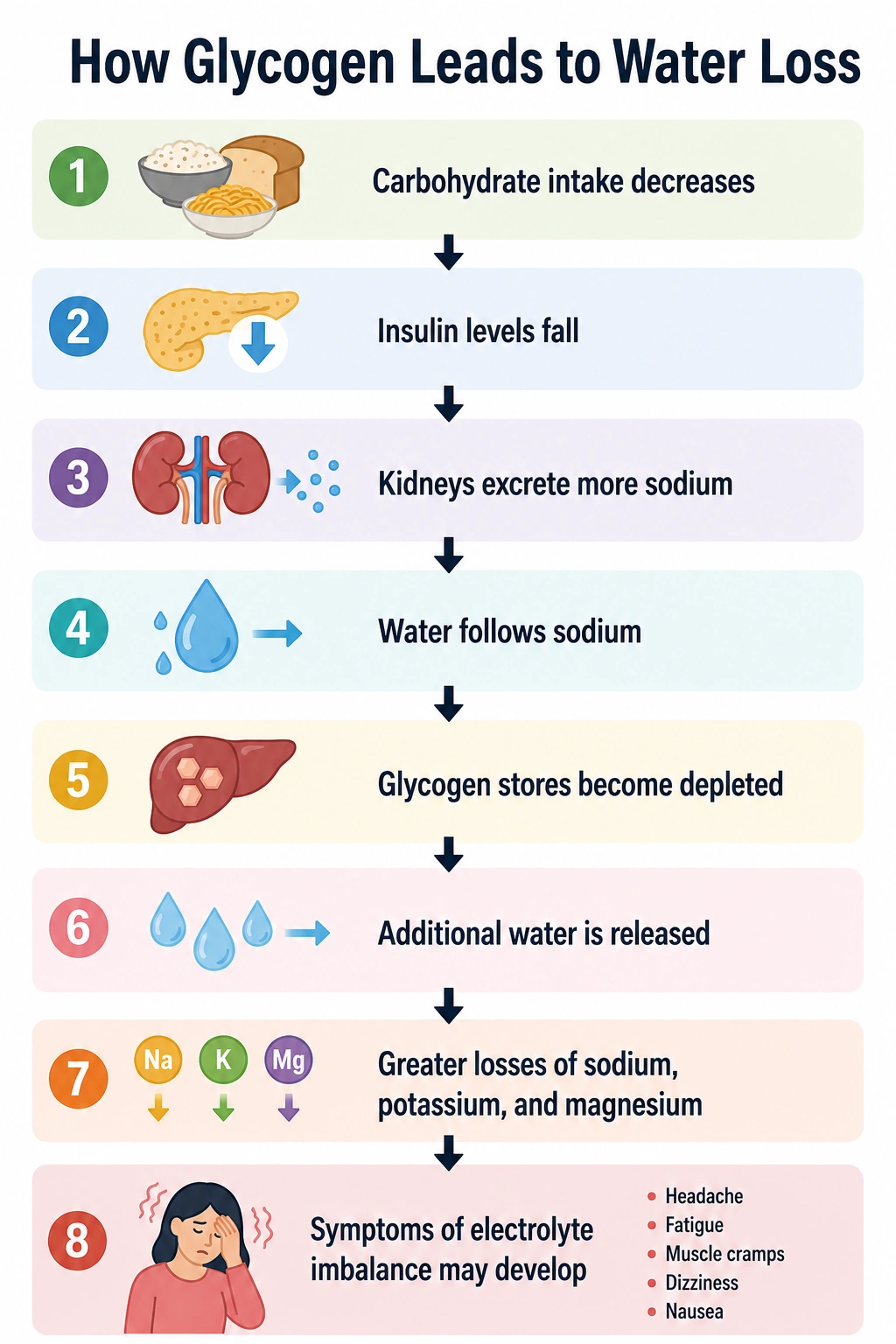
Another reason for increased water loss involves glycogen.
Glycogen is the stored form of carbohydrate found in your muscles and liver. Every gram of stored glycogen is bound to several grams of water [7] [8] [9].
As glycogen stores become empty during the first few days of keto, the stored water is released and excreted. The image below shows how this process works.
This process is completely normal and is one of the reasons why electrolyte intake becomes much more important during the early stages of ketosis.
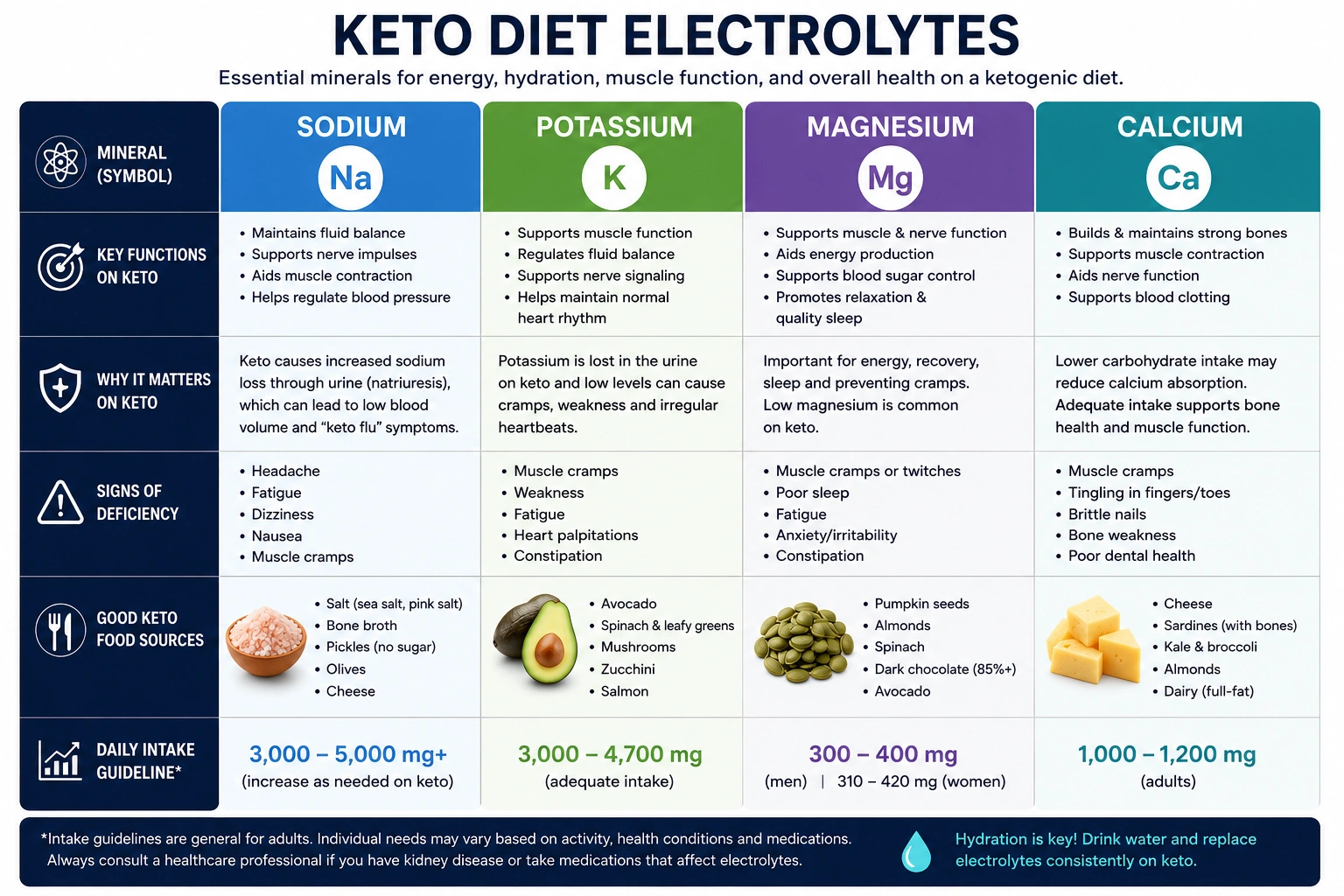
While there are different minerals and electrolytes at work in our body, we need 4 of them more than others on a Keto Diet.
[cta-meetings]
The Main Electrolytes in the Human Body
The table below shows the four main Keto Diet electrolytes [10] [11].
Bone health, muscle contraction, nerve transmission
Dairy products, sardines, leafy greens
These minerals work together. A deficiency in one electrolyte can sometimes affect the balance of others, which is why total electrolyte intake is more important than focusing on a single mineral.
Sodium: The Most Important Electrolyte on Keto
One of the most important Keto Diet electrolytes is sodium. Actually, if there is one electrolyte that deserves the most attention during the early stages of a ketogenic diet, it is sodium [12] [13].
Unlike many diets that encourage sodium restriction, ketogenic diets focus more on replacing the sodium lost in urine, especially during the initial adaptation phase.
Sodium plays a role in nearly every organ system. It helps:
Maintain fluid balance
Support healthy blood pressure
Transmit nerve impulses
Enable muscle contractions
Support cognitive function
Maintain normal circulation
Improve exercise performance
Without enough sodium, your body cannot properly regulate fluid distribution or support normal nerve and muscle function.
Signs You May Not Be Getting Enough Sodium
Low sodium intake or excessive sodium losses can cause the following symptoms:
Headaches
Fatigue
Brain fog
Dizziness when standing
Weakness
Reduced endurance during exercise
Low energy
Increased thirst
Because these symptoms overlap with other conditions, you cannot always decide you have a sodium deficiency. They may be a signal to evaluate your hydration and electrolyte intake.
You can also consult qualified healthcare professionals or Keto and Carnivore Coaches to ensure you are eating enough sodium.
Potassium: The Electrolyte for Proper Muscles and Heart Function
Potassium is another important electrolyte on a Keto Diet because it helps maintain normal muscle contractions, nerve signaling, and heart function [14].
Potassium is the main electrolyte found inside your cells, where it works closely with sodium to regulate fluid balance and electrical activity throughout the body.
When sodium and potassium are out of balance, you may experience muscle weakness, fatigue, or cramps.
Unlike sodium, potassium supplements are usually sold in small doses because excessive potassium intake from supplements can be dangerous, especially for people with kidney disease or those taking certain medications.
The safest way to meet potassium needs for most healthy individuals is by consuming whole, Keto-friendly foods.
[cta-shop-products]
Why Your Body Needs Potassium
Potassium supports numerous essential functions in the body, including:
Regulating fluid balance inside cells
Supporting healthy nerve transmission
Maintaining normal muscle contractions
Helping regulate heart rhythm
Supporting healthy blood pressure
Helping carbohydrate and protein metabolism
Because potassium works together with sodium, maintaining a healthy balance between the two minerals is more important than focusing on just one.
A low potassium intake can lead to symptoms such as:
Muscle weakness
Muscle cramps
Fatigue
Constipation
Tingling sensations
Heart palpitations
Reduced exercise performance
These symptoms are not unique to potassium deficiency and can have many causes. Persistent muscle weakness, irregular heartbeat, or severe symptoms should always be evaluated by a healthcare professional.
Keto-Friendly Sources of Potassium
Many people associate potassium with bananas, but bananas are high in carbohydrates and are not the best choice for a ketogenic diet. But there are many Keto-friendly foods rich in potassium. For example,
Magnesium is involved in more than 300 enzymatic reactions throughout the body. It plays a critical role in energy production, muscle relaxation, nerve function, sleep quality, protein synthesis, and blood sugar regulation [15] [16].
Although magnesium deficiency is not specific to Keto, some people may consume less magnesium-rich foods when lowering carbohydrates and transitioning away from fruits, legumes, and whole grains.
When mixed with increased fluid losses during the early stages of ketosis, magnesium deficiency can cause symptoms such as muscle cramps or fatigue.
Why Your Body Needs Magnesium
Magnesium helps:
Relax muscles after contraction
Support healthy nerve function
Produce cellular energy (ATP)
Maintain normal heart rhythm
Support healthy bones
Promote restful sleep
Help regulate blood sugar
Signs You May Not Be Getting Enough Magnesium
Muscle cramps
Muscle twitching
Fatigue
Poor sleep
Headaches
Anxiety or irritability
Constipation
Reduced exercise recovery
Because these symptoms are nonspecific, they do not necessarily indicate magnesium deficiency. However, many people find that consuming more magnesium helps relieve muscle cramps and supports better sleep.
Should I Take a Magnesium Supplement on a Keto Diet?
Not everyone following a ketogenic diet needs a magnesium supplement. However, supplementation can help those who:
Frequently experience muscle cramps
Have difficulty meeting magnesium needs through food
Sweat heavily during exercise
Experience constipation
Have more magnesium needs due to medical conditions (under professional guidance)
Common supplemental forms include magnesium glycinate, citrate, malate, and chloride. Magnesium oxide is less expensive but is generally absorbed less efficiently and may cause digestive discomfort in some people.
Calcium does not usually receive as much attention as sodium or magnesium among those on Low-Carb or Keto diets because most people continue to obtain adequate amounts through foods [17].
However, calcium is not just essential for maintaining strong bones.
Why Your Body Needs Calcium
Calcium helps:
Build and maintain bones and teeth
Support muscle contractions
Enable nerve signaling
Promote normal blood clotting
Support heart function
Keto-Friendly Sources of Calcium
Cheese
Plain Greek yogurt (in moderation)
Sardines with bones
Canned salmon with bones
Kale
Bok choy
Broccoli
Unsweetened fortified almond milk (if allowed)
If you avoid dairy, pay more attention to calcium intake through other foods or discuss supplementation with your healthcare provider.
One of the challenges of identifying electrolyte imbalances is that many symptoms overlap. A headache, for example, can be caused by dehydration, sodium loss, lack of sleep, illness, or other factors.
You can use the table below as a general guide, but not a diagnostic tool.
Symptom
Sodium
Potassium
Magnesium
Calcium
Headache
✓
-
-
-
Fatigue
✓
✓
✓
-
Brain fog
✓
-
-
-
Muscle cramps
-
✓
✓
✓
Muscle weakness
-
✓
✓
-
Constipation
-
✓
✓
-
Dizziness
✓
-
-
-
Heart palpitations
-
✓
✓
-
Poor exercise performance
✓
✓
✓
-
Muscle twitching
-
-
✓
✓
Difficulty sleeping
-
-
✓
-
Important: These symptoms can result from many conditions besides electrolyte imbalances. Persistent, severe, or concerning symptoms, especially chest pain, fainting, severe weakness, or ongoing heart palpitations, require prompt medical evaluation.
How Much Electrolytes Do You Need on a Keto Diet?
Different people have varying electrolyte needs. Your needs depend on factors such as [18]:
Age
Gender
Activity level
Sweat losses
Climate
Body size
Diet
Medications
Kidney function
Underlying medical conditions
However, many keto experts recommend paying particular attention to sodium intake during the early weeks of the diet because sodium losses increase during the transition into ketosis.
The table below summarizes recommended intake ranges for healthy adults. But please consult your healthcare provider before using the following recommendations.
Meet the recommended daily intake mainly through food
Muscle and heart function
Magnesium
About 300-420 mg depending on age and gender
Muscle relaxation, energy production
Calcium
About 1,000-1,200 mg depending on age and gender
Bone health and muscle contraction
*These values are general educational guidelines, not personalized medical advice. People with kidney disease, heart disease, high blood pressure, or those taking medications such as diuretics, ACE inhibitors, or certain blood pressure medications should consult their healthcare provider before increasing electrolyte intake.
The Best Keto Foods Rich in Keto Diet Electrolytes
The easiest way to maintain healthy electrolyte levels is to build your meals around nutritious, whole foods [19].
Many Keto-friendly foods provide different electrolytes at once, making them excellent additions to your diet.
The table below lists some of the Keto-friendly foods rich in Keto Diet electrolytes: sodium, potassium, magnesium, and calcium.
Food (per 100 g)
Sodium (mg)
Potassium (mg)
Magnesium (mg)
Calcium (mg)
Net Carbs (g)
Bone broth*
300-600
30-80
5-15
10-30
<1
Beef
55-75
310-340
20-24
10-18
0
Salmon
60-90
420-500
28-35
8-12
0
Sardines (with bones, canned)
450-550
350-420
35-40
350-400
0
Avocado
7
485
29
12
2
Spinach (raw)
79
558
79
99
1.4
Swiss chard (raw)
213
379
81
51
2.1
Mushrooms (white)
5
318
9
3
2.3
Pumpkin seeds
7
809
592
46
5
Cheese (Cheddar)
620
98
28
710
1.3
Broccoli (raw)
33
316
21
47
4
* Bone broth varies depending on the recipe, cooking time, and whether salt has been added. Commercial bone broths can contain anywhere from 300 mg to over 900 mg of sodium per cup, so check the nutrition label.
You should also note that electrolyte balance is not just specific to the early adaptation phase, and your needs can change at different stages of the diet. So, you need to adjust accordingly.
How Do Electrolyte Needs Change During Your Keto Diet?
Your electrolyte requirements are usually highest during the first few weeks of ketosis, when water and sodium losses are greatest.
The table below shows how your electrolyte needs can generally change during the Keto Diet.
Please note that not everyone follows the same timeline. Some people transition into ketosis with minimal symptoms, while others require more careful attention to hydration and electrolyte intake.
Time on Keto
What Happens
Electrolyte Tips
Days 1-3
Glycogen depletion begins
Increase fluids and sodium
Days 3-7
Peak water and sodium loss
Focus on sodium while consuming high-potassium foods
Weeks 2-4
Adaptation to ketosis continues
Maintain a balanced intake of all electrolytes
One month and beyond
Fluid balance becomes more stable
Continue eating electrolyte-rich whole foods and adjust intake based on activity and sweat losses
Can You Get Enough Electrolytes from Food Alone?
Yes, many healthy people can get enough Keto Diet electrolytes from food. A well-planned Keto Diet Meal Plan that includes meat, fish, eggs, leafy greens, avocados, broth, dairy (if tolerated), nuts, and seeds can provide high amounts of essential electrolytes.
However, some people may need additional electrolytes. For example,
New keto dieters experiencing rapid water loss
Athletes
Endurance runners
People who exercise in hot climates
Individuals who sweat heavily
People practicing prolonged intermittent fasting
Individuals with gastrointestinal illnesses causing fluid loss
Do You Need an Electrolyte Supplement on a Keto Diet?
Whether you need electrolyte supplements depends on your diet, activity level, health status, underlying health issues, medications, and how your body responds to ketosis.
Many healthy individuals can meet most of their electrolyte needs by eating a nutritious keto meal that includes whole, nutritious foods such as meat, fish, eggs, leafy greens, avocados, dairy (if tolerated), nuts, seeds, and broth.
However, others may need electrolyte supplements, especially during the first few weeks of keto, when sodium and water losses are at their highest.
You may need an electrolyte supplement if you:
Are new to the ketogenic diet
Experience symptoms of keto flu
Exercise intensely or for long durations
Sweat heavily
Live in a hot or humid climate
Practice intermittent fasting or extended fasting
Drink large amounts of water throughout the day
Have difficulty consuming enough electrolyte-rich foods
Supplements should complement a nutritious diet, not replace it. You should also take them under the supervision of healthcare professionals to ensure the amount and type.
Electrolyte supplements come in several forms and have their advantages and disadvantages. The table below shows some of the most common types of electrolytes with their main pros and cons.
Supplement Type
Advantages
Disadvantages
Best For
Electrolyte powders
High electrolyte content, customizable, often flavored
Usually more expensive
Daily use, athletes
Electrolyte drink mixes
Convenient and portable
Some contain added sugars or artificial ingredients
Beginners and travel
Electrolyte tablets
Easy to carry
Often contain relatively small amounts of sodium
Work, hiking, travel
Electrolyte drops
Mix into any beverage
Not everyone may like their taste
People who prefer unflavored drinks
Capsules
Easy to take
Usually provide less sodium than powders
Targeted supplementation
Homemade electrolyte drink
Affordable, customizable
Requires preparation
Everyday use
What to Look for in a Keto Electrolyte Supplement?
When buying supplements, consider:
Enough sodium content
Meaningful amounts of potassium and magnesium
Little or no added sugar
Transparent ingredient list
Appropriate serving size
Third-party testing or quality certifications, when available
Avoid assuming that every sports drink is Keto-friendly. Many sports beverages are designed for endurance athletes consuming carbohydrates and may contain high amounts of added sugar.
The best way to get enough Keto Diet electrolytes beyond food is to make homemade DIY electrolyte drinks because they are usually healthier and customizable.
You can make a simple homemade electrolyte drink using the following common ingredients.
Ingredients
2 cups (500 mL) water
¼-½ teaspoon mineral salt or sea salt
A squeeze of fresh lemon or lime juice (optional)
Ice cubes (optional)
Instructions
Mix all the ingredients and enjoy!
Some people also include a potassium-containing salt substitute or magnesium supplement, but these additions should be used carefully and only when appropriate.
If you have kidney disease, heart disease, or take medications that affect potassium levels, consult your healthcare provider before using potassium-containing products.
When to Drink It?
A homemade electrolyte drink can be especially helpful:
During the first week of Keto
Before or after exercise
During hot weather
After excessive sweating
During intermittent fasting
When experiencing early keto flu symptoms
You can also drink your DIY homemade electrolyte drinks before or after exercise to boost recovery.
Exercise increases fluid and electrolyte losses through sweat, which is why proper electrolyte intake becomes more important for physically active individuals.
People who regularly perform:
Weight training
Endurance running
Cycling
High-intensity interval training (HIIT)
Team sports
Outdoor activities in hot weather
may lose significantly more sodium than sedentary individuals.
Signs You May Need More Electrolytes Around Workouts
Muscle cramps
Early fatigue
Dizziness
Headaches after exercise
Poor recovery
Reduced performance
Tips for Exercising on a Keto Diet
Stay hydrated throughout the day.
Consume electrolyte-rich foods consistently.
Consider an electrolyte drink before or after prolonged workouts if you sweat heavily.
Adjust your intake based on climate, workout duration, and sweat rate rather than following a one-size-fits-all approach.
Also, while almost all foods and drinks are forbidden during intermittent fasting, you can drink homemade electrolyte drinks to balance fluids.
Many people mix a Keto Diet with intermittent fasting to support weight loss or metabolic health.
During fasting, you are not allowed to consume meals that provide electrolytes, yet your body continues to lose water and minerals through urine and sweat.
This is one reason some people experience headaches, fatigue, or dizziness during fasting. So, you need to maintain hydration and electrolyte balance depending on the type and duration of your fast.
However, whether electrolytes are appropriate during a fast depends on your fasting goals and the specific products used.
So, for prolonged fasts or if you have medical conditions, seek professional guidance before supplementing.
Common Keto Electrolyte Mistakes
Drinking More Water Without Replacing Electrolytes: Increasing water intake alone does not necessarily solve electrolyte imbalances.
Avoiding Salt Completely: Some people continue following a low-sodium approach after switching to keto, despite increased sodium losses during ketosis.
Ignoring Potassium-Rich Foods: Meat is an important part of many keto diets, but do not forget Keto-friendly vegetables like spinach, mushrooms, and avocados that are valuable potassium sources.
Forgetting About Magnesium: Persistent muscle cramps, poor sleep, or constipation may sometimes improve by increasing magnesium intake from foods or supplements.
Choosing Sugary Sports Drinks: Many electrolyte beverages for athletes contain added sugars that are not Keto-friendly.
Taking Large Amounts of Potassium Without Medical Advice: More is not always better. Excess potassium can be dangerous, especially for individuals with kidney disease or those taking certain medications.
Assuming Every Symptom Is an Electrolyte Problem: Fatigue, headaches, and muscle cramps can have many causes. If symptoms are severe, persistent, or unusual, seek medical help.
Yes, although electrolyte deficiencies receive most of the attention, consuming excessive amounts of certain electrolytes can also be harmful.
Too Much Sodium
Very high sodium intake can lead to:
Excessive thirst
Swelling in some individuals
Elevated blood pressure in salt-sensitive people
Healthy kidneys usually regulate sodium effectively, but people with kidney disease or certain cardiovascular conditions should follow personalized medical advice.
Too Much Potassium
High potassium levels (hyperkalemia) can interfere with normal heart rhythm and even become life-threatening. Risk is greatest in people with:
Kidney disease
Certain blood pressure medications
ACE inhibitors
ARBs
Potassium-sparing diuretics
This is one reason potassium supplements are generally sold in small doses.
Too Much Magnesium
Too much magnesium from food is uncommon because healthy kidneys eliminate the excess. However, very high supplemental doses may cause:
Diarrhea
Nausea
Abdominal cramping
Severe magnesium toxicity is rare but possible in people with impaired kidney function.
Who Should Consult Healthcare Providers Before Increasing Electrolytes?
Generally, most healthy adults can safely source electrolytes from food. However, you should seek medical advice before significantly increasing electrolyte intake if you:
Have kidney disease
Have heart failure
Have uncontrolled high blood pressure
Take diuretics
Take ACE inhibitors
Take ARBs
Take potassium-sparing medications
Have adrenal disorders
Are on a low-sodium diet
Personalized guidance is especially important because these conditions and medications can alter how your body regulates sodium, potassium, and other minerals.
You can also use the following checklist to support the balance of Keto Diet electrolytes in a healthy way.
Keto Diet Electrolytes Checklist
✅ Eat different high-electrolyte whole foods.
✅ Include sodium-rich foods if it aligns with your health needs.
✅ Eat potassium-rich keto vegetables regularly.
✅ Include magnesium-rich foods, such as leafy greens, nuts, and seeds.
✅ Drink water throughout the day.
✅ Adjust electrolyte intake based on exercise, heat, and sweat losses.
✅ Consider supplements only if your doctor recommends.
✅ Avoid high-sugar sports drinks.
✅ Consult your healthcare provider if you have medical conditions affecting electrolyte balance.
The table below compares the electrolyte needs of different groups of individuals.
Group
Why Electrolyte Needs May Increase
Keto beginners
Rapid sodium and water loss
Athletes
Increased sweat losses
Hot climates
Higher fluid loss
Sauna users
Sodium depletion
Heavy sweaters
More electrolyte needs
Intermittent fasters
Fewer eating opportunities
Endurance athletes
Long-duration sweat losses
Keto Diet Electrolytes Myths vs. Facts
The table below summarizes the most commonly believed myths about the Keto Diet electrolytes and facts.
Myth
Fact
Everyone on keto needs supplements.
Many people meet their needs through food alone.
Drinking more water always fixes keto flu.
Water without electrolytes may not address mineral losses.
Bananas are the only good source of potassium.
Many keto-friendly foods, such as avocados and spinach, are rich in potassium.
Pink Himalayan salt provides all the electrolytes you need.
It mainly provides sodium, and it has trace minerals in very small amounts.
Final Thoughts
While many people focus on carbohydrates, fats, and protein when starting a ketogenic diet, electrolytes should not be missed.
Maintaining a healthy balance of sodium, potassium, magnesium, and calcium can make the transition into ketosis smoother, reduce the likelihood of keto flu symptoms, and support athletic performance.
Rather than relying on supplements, make meals with whole, nutritious foods, stay hydrated, and adjust your electrolyte intake based on your lifestyle and needs.
Let’s find answers to the most frequently asked questions about Keto Diet electrolytes.
Do You Need Electrolytes on a Keto Diet?
Yes, electrolytes are especially important during the first few weeks of a ketogenic diet to reduce symptoms such as headaches, fatigue, muscle cramps, and dizziness.
Which Electrolytes Are Most Important on Keto?
The most important Keto Diet electrolytes are sodium, potassium, and magnesium. Calcium is also important.
Why Does Keto Make You Lose Electrolytes?
Carbohydrate intake decreases in a Keto Diet, so insulin levels fall. Lower insulin signals the kidneys to excrete more sodium, and water follows sodium into the urine. This increased fluid loss can also affect potassium and magnesium balance, especially during the first week of ketosis.
What Are the Symptoms of Low Electrolytes on Keto?
Common symptoms are headaches, fatigue, brain fog, dizziness, muscle cramps, weakness, constipation, increased thirst, and reduced exercise performance.
Many Keto experts suggest that healthy adults need more sodium than they did before keto because sodium losses increase during ketosis. Your needs depend on sweat losses, climate, exercise, medications, and underlying health conditions.
Can You Get Enough Electrolytes from Food Alone?
Usually yes. A planned Keto meal that includes meat, seafood, eggs, leafy greens, avocados, dairy (if tolerated), nuts, seeds, and broth can provide substantial amounts of sodium, potassium, magnesium, and calcium.
Are Electrolyte Supplements Necessary on Keto?
No, many people never need supplements if they eat electrolyte-rich foods. Supplements may be helpful with a doctor’s advice during the first few weeks of Keto, after prolonged exercise, during periods of heavy sweating, or when dietary intake is insufficient.
Can Drinking Too Much Water Cause Electrolyte Problems?
Yes, drinking too much plain water without replacing electrolytes can dilute sodium levels. Staying hydrated involves an appropriate balance between fluids and electrolytes.
Is Pink Himalayan Salt Better Than Regular Salt on Keto?
Pink Himalayan salt contains small amounts of trace minerals, but the quantities are too low to make a meaningful contribution to your daily electrolyte intake. So, both are almost the same.
Is Bone Broth a Good Source of Electrolytes?
Yes, bone broth is a rich source of sodium and fluids, but it should not be your only source of electrolytes.
Can Keto Electrolytes Help Prevent Muscle Cramps?
Muscle cramps can have many causes, but inadequate sodium, potassium, or magnesium intake can contribute in some people.
Can You Take Electrolytes While Intermittent Fasting?
Many people do, especially during extended fasts or periods of heavy sweating.
Just avoid products containing calories, sweeteners, or other ingredients that can be against your fasting protocols.
What Happens If You Get Too Many Electrolytes?
Too much sodium can increase blood pressure, while excessive potassium can interfere with normal heart rhythm, especially in people with kidney disease or those taking certain medications. High doses of magnesium supplements can cause diarrhea and digestive upset.
[cta-shop-products]
Do Electrolyte Drinks Break Ketosis?
Most sugar-free electrolyte drinks do not break ketosis because they contain little or no carbohydrate. But some sports drinks are high in added sugars, which can affect ketosis.
What Is the Best Source of Electrolytes on a Keto Diet?
A combination of whole foods, including meat, seafood, leafy greens, avocados, dairy (if tolerated), nuts, seeds, and broth, provides a wide range of electrolytes plus protein, healthy fats, vitamins, and other essential nutrients.
!
Caution
This guide was developed using evidence from peer-reviewed nutrition research, clinical practice guidelines, and established resources on ketogenic diets, hydration, and electrolyte physiology.
Because electrolyte needs vary between individuals, this article is intended for educational purposes and should not replace personalized medical advice. People with kidney disease, heart disease, high blood pressure, endocrine disorders, or those taking medications that affect sodium or potassium balance should consult their healthcare provider before making significant dietary or supplement changes.
Every week your favorite Carnivore doctors like Dr Chaffee, Dr Baker, Dr Bright join us LIVE to answer your medical questions and our coaches will help you lose weight and heal inflammation fast.
The Primal is your ultimate resource for the ketogenic diet—helping you lose weight, heal chronic disease, and take back your health, all for free!
Founded by Rina Ahluwalia, a health expert with 20+ years of experience and host of The Primal Podcast (on YouTube, Spotify & Apple Podcasts), we bring you weekly in depth conversations with board-certified doctors on topics like insulin resistance, cancer prevention, heart disease, and more.
Everything we share is backed by research and published on The Primal Lab, with references, books, tools, and easy-to-follow guides. Plus, you’ll find thousands of free articles, blog posts, recipes, and troubleshooting tips at ThePrimal.com to help you succeed on Carnivore and Keto. 👉 Subscribe to The Primal Podcast on YouTube or join our mailing list using the below form for the latest health insights—straight to your inbox!