Join The Primal and the world’s top doctors, creators, and health pioneers — Dr. Ken Berry, Dr. Shawn Baker, Dr. Berg, Dr. Chaffee, and more — at Meatstock x The Primal 2026.
The ultimate Carnivore, Keto, and Health convention.
MCT oils have become one of the most popular ingredients for people following Low-Carb, Keto, and even Carnivore diets. These oils are usually added to coffee, smoothies, and shakes to provide quick energy and increase ketone production. But are MCT oils really worth using, and can you consume them while staying in ketosis? To answer this question, we need to learn what MCT oils are, how they work, their benefits, potential side effects, and how to choose the best MCT oil for your goals.
Highlights
MCT oils are Keto-friendly and low-carb because they contain no carbohydrates or sugar. Unlike most dietary fats, they are rapidly absorbed and converted into energy and ketones, making them a popular choice for people trying to induce ketosis, improve energy levels, or increase healthy fat intake. While beneficial, they are optional, not a requirement for success on a Ketogenic Diet.
What Are MCT Oils?
MCT stands for medium-chain triglycerides, a type of fat made of medium-length fatty acids. Unlike long-chain fats found in many cooking oils, MCTs go directly to the liver, where they are quickly converted into energy or ketones instead of requiring long digestion.
Natural sources of MCTs include coconut oil, palm kernel oil, butter, and dairy products, although pure MCT oil is much more concentrated than these foods.
Let’s take a look at the table below, which shows some of the most common foods that naturally contain MCT oil.
Good to Know: Coconut oil contains only about 50-60% MCTs, while quality MCT oil is nearly 100% medium-chain triglycerides.
Join 100,000+ subscribers to get monthly emails on the best science-based tools and strategies for optimal health from Rina.
Thank you! You're now subscribed!
Oops! Something went wrong while submitting the form.
We value your time and send just 1 insightful email monthly.
You'll also get Rina's exclusive Daily Blueprint. In it, Rina shares her daily routine. She also shares practical tools and protocols that you can use to heal inflammation and maximize your health.
By submitting your email to subscribe, you agree to The Primal's privacy policy
Types of MCT Oils
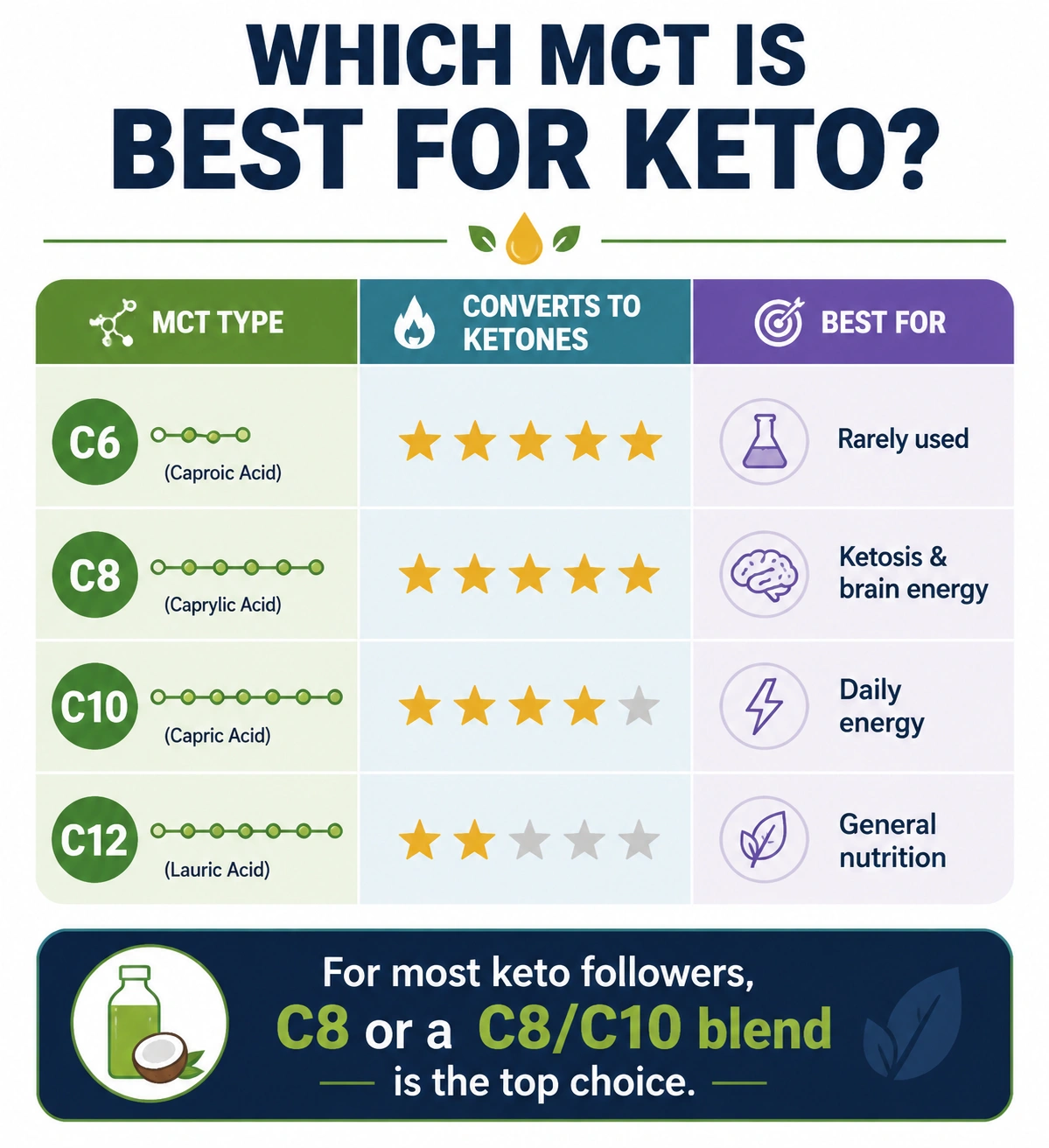
There are different kinds of MCT oils. Let’s compare them to see how they differ and what each one is better for.
Type
Carbon Length
Best for
C6 (Caproic Acid)
6
Fast ketone production but rarely sold alone
C8 (Caprylic Acid)
8
Fastest conversion into ketones
C10 (Capric Acid)
10
Energy and everyday keto support
C12 (Lauric Acid)
12
Digested more like a long-chain fat
C8 MCT oil is generally considered the most ketogenic, while a C8/C10 blend balances usage, affordability, and versatility.
Different studies show that MCT oils can offer several benefits, especially when you are following a healthy low-carb lifestyle. Let’s learn about some of their common benefits.
MCT Oils Can Increase Ketone Production: Because MCTs are rapidly metabolized, they can raise ketone levels faster than most other dietary fats.
MCT Oils Provide Quick Energy: Many athletes and Keto followers use MCT oil before workouts or during busy days because it is converted into usable energy quickly.
MCT Oils Can Help You Feel Fuller: Some studies suggest MCT oils can increase satiety, making it easier to control calorie intake than certain long-chain fats.
MCT Oils Can Support Brain Function: The ketones produced from MCT oil provide an alternative energy source for the brain, which can help mental clarity.
While MCT oils support ketosis, you do not need MCT oil to be successful on Keto. Many people induce and maintain ketosis through whole-food fats alone.
How to Use MCT Oils?
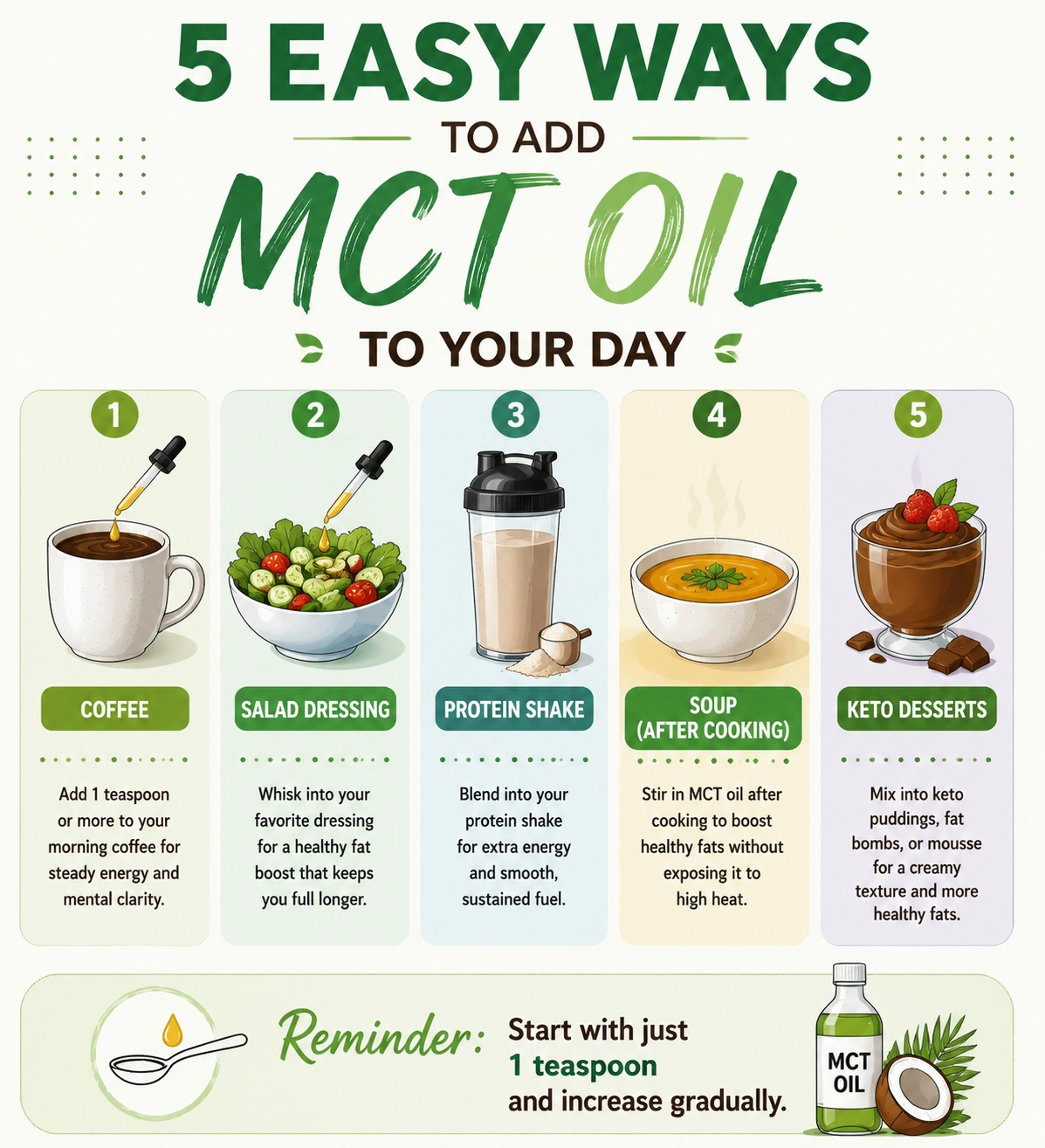
MCT oils have a neutral flavor, so they can be easily added to many recipes. For example, you can add them to:
If you are a beginner, eat a 1 tsp serving; if you are an intermediate dieter, use a 1 tbsp serving; and if you are experienced, you can eat 1-2 tbsp daily
It is best to start slowly to avoid digestive discomfort. Increase your intake gradually over one to two weeks.
MCT oils are a convenient, Keto-friendly source of rapidly absorbed fat that can help support ketone production, provide quick energy, and make it easier to increase healthy fat intake.
While they are not essential for ketosis, they can be a useful addition to a healthy and balanced low-carb or ketogenic lifestyle.
When choosing an MCT oil, look for high-quality products with simple ingredients, start with small servings, and use them alongside a nutritious diet for the best results.
FAQs
Let’s find answers to the most frequently asked questions about MCT oils on a Keto or Low-Carb Diet.
Can You Cook with MCT Oil?
MCT oil is not the best choice for high-heat cooking because it has a relatively low smoke point. It is best used in cold dishes, drinks, smoothies, finished meals, sauces, and dressings rather than for frying or high-heat sautéing.
Many Keto followers prefer 100% C8 MCT oil for maximum ketone production, while C8/C10 blends are great for everyday use.
Can I Eat MCT Oil Every Day?
Yes, most healthy adults can use MCT oil daily as part of a balanced diet. Start with small servings and increase gradually if you need to.
Can Diabetics Use MCT Oil?
MCT oil does not contain sugar and has minimal impact on blood glucose, but people with diabetes should consult their healthcare provider before adding new foods to their diet.
Is MCT Oil Better than Coconut Oil?
MCT oil produces ketones more efficiently, while coconut oil is more versatile for cooking.
Many people consume it in the morning with coffee, before workouts, or between meals for sustained energy.
Is MCT Oil Suitable for Carnivore Diets?
Yes. Although commonly derived from coconut or palm kernel oil, MCT oil contains only fat and is used by many people following a Carnivore Diet or other animal-based diets.
Every week your favorite Carnivore doctors like Dr Chaffee, Dr Baker, Dr Bright join us LIVE to answer your medical questions and our coaches will help you lose weight and heal inflammation fast.
The Primal is your ultimate resource for the ketogenic diet—helping you lose weight, heal chronic disease, and take back your health, all for free!
Founded by Rina Ahluwalia, a health expert with 20+ years of experience and host of The Primal Podcast (on YouTube, Spotify & Apple Podcasts), we bring you weekly in depth conversations with board-certified doctors on topics like insulin resistance, cancer prevention, heart disease, and more.
Everything we share is backed by research and published on The Primal Lab, with references, books, tools, and easy-to-follow guides. Plus, you’ll find thousands of free articles, blog posts, recipes, and troubleshooting tips at ThePrimal.com to help you succeed on Carnivore and Keto. 👉 Subscribe to The Primal Podcast on YouTube or join our mailing list using the below form for the latest health insights—straight to your inbox!